
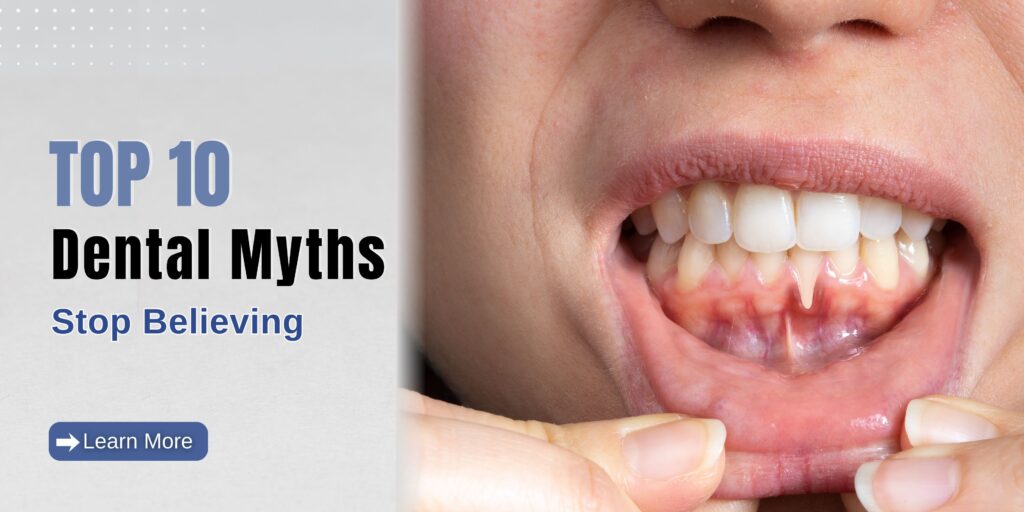
Have you ever stopped to question whether that “helpful” dental advice passed down by a family member is actually true? With old traditions, half-heard tips, and viral social media trends everywhere, people often pick up mixed messages about oral care. Unfortunately, following these common dental myths can lead to preventable problems such as tooth decay, gum disease, bad breath, and even expensive dental treatments later on.
This guide clears the confusion. It explains why dental myths spread so quickly and breaks down ten of the most common myths using simple, accurate, evidence-based facts. Understanding the truth behind these myths is the first step toward smarter choices and better long-term oral health.
Top 10 Dental Myths You Should Stop Believing
The most important thing to understand is this: many common dental myths are not just harmless beliefs. They can delay treatment, increase pain, and even lead to tooth loss. When patients follow dental myths instead of real advice from a dentist, they risk their oral health and overall well-being. That’s why the team at Dr. Saket’s Dental Makeover focuses on educating patients and clearing these dental myths in a simple, friendly way.
10 Common Dental Myths Debunked
Myth 1: “Brushing harder cleans your teeth better.”
Reality: Brushing harder does not clean better; it damages the enamel and irritates gums. A soft-bristled brush, gentle pressure, and proper technique are enough to remove plaque. Dentists at Dr Saket’s Dental Makeover often see patients with sensitive teeth because of this dental myth.
Myth 2: “Sugar is the only cause of cavities.”
Reality: Sugar is a big factor, but it’s not the only one. Cavities form when bacteria feed on leftover food and produce acids that attack the tooth surface. Sticky snacks, acidic drinks, poor brushing habits, and not visiting the dentist regularly also play a role. So, focusing only on sugar is another misleading dental myth.
Myth 3: “If my gums bleed, I should stop flossing.”
Reality: Bleeding gums are usually a sign of inflammation, not a sign to stop flossing. In fact, gentle and regular flossing helps clean between teeth and reduce gum bleeding over time. Stopping flossing allows more plaque to build up and can make the problem worse.
Myth 4: “If my teeth look healthy and don’t hurt, everything is fine.”
Reality: Many dental problems start silently. Cavities, gum disease, and early infections often don’t cause pain at first. By the time pain appears, the issue may be advanced. This dental myth leads people to skip regular check-ups. Dentists at Dr Saket’s Dental Makeover often detect hidden problems during routine exams long before they become painful.
Myth 5: “Baby teeth don’t matter they fall out anyway.”
Reality: Baby teeth act like guides for permanent teeth, helping in proper chewing, speech development, and jaw growth. If baby teeth decay or fall out prematurely, it can lead to crowding or misalignment later. Treating baby teeth properly is essential, and ignoring them because of this dental myth can create big problems for a child’s future smile.
Myth 6: “Chewing gum can replace brushing.”
Reality: Sugar-free chewing gum can help increase saliva and reduce food particles, but it can never replace brushing and flossing. Gum does not remove sticky plaque from tooth surfaces and gum lines. It may freshen breath for a short time, but relying on this dental myth leads to poor cleaning.
Myth 7: “White teeth are healthy teeth.”
Reality: Colour is not the full story. Teeth can be naturally slightly yellow and still be strong and healthy. At the same time, very white teeth may still have cavities or gum disease. Only a dental check-up can tell if teeth are truly healthy. Believing this dental myth can make people focus only on whitening, not on real oral health.
Myth 8: “Charcoal toothpaste is safer and better for whitening.”
Reality: Charcoal toothpaste is often harsh and abrasive. It can wear down enamel, making teeth more sensitive and even more yellow over time because the inner layer becomes exposed. Many charcoal products are not tested or recommended by dentists. This popular dental myth can quietly harm the smile instead of improving it.
Myth 9: “You should brush right after eating.”
Reality: Brushing immediately after eating acidic foods or drinks (like citrus fruits or soft drinks) can push the acid deeper into the enamel and weaken it. Dentists usually suggest waiting about 30 minutes, rinsing with water first, and then brushing. This helps protect enamel and keep teeth strong.
Myth 10: “Rinsing after brushing is necessary.”
Reality: Many people rinse their mouths with lots of water right after brushing. This washes away the fluoride from the toothpaste that is meant to stay on teeth and protect them. Spitting out the foam but not heavy rinsing allows the fluoride to keep working longer. This simple change can greatly improve protection against cavities and is a helpful correction to a common dental myth.
Your Oral Health and Your Body
Oral health is closely linked to overall health. Untreated gum disease and infections can affect blood sugar control in diabetes, increase inflammation in the body, and may be linked to heart problems. When patients follow dental myths instead of proper care, they risk more than just their teeth.
Regular check-ups at a trusted clinic like Dr Saket’s Dental Makeover help detect issues early and protect overall health, not just the smile.
How to Identify Reliable Dental Information
To avoid dental myths and confusion, patients can:
Check if the advice comes from qualified dentists or professional dental bodies.
Be cautious of “magic” home remedies that promise instant results.
Compare information on more than one trusted health website.
Ask their dentist directly during appointments.
Simple questions like “Is this safe?” or “Is this just another dental myth?” can open helpful conversations.
Frequently Asked Questions
Are dental myths harmful to oral health?
Yes. Many dental myths lead to poor habits such as aggressive brushing, incorrect cleaning methods, or delaying treatment. These can cause gum disease, cavities, and enamel erosion. Evidence-based dental care recommended by professionals like Dr. Saket’s Dental Makeover prevents these issues.
Is brushing harder better for cleaning teeth?
No. Hard brushing wears down enamel and irritates the gums. A soft toothbrush and gentle circular motions clean teeth effectively without damaging them.
Does sugar alone cause cavities?
No. Cavities form when bacteria feed on any food particles—including starchy foods and acidic drinks. Frequent snacking and poor brushing habits also increase decay risk.
Should I stop flossing if my gums bleed?
No. Bleeding gums usually mean inflammation due to plaque buildup. Gentle daily flossing helps reduce bleeding over time and keeps gums healthy.
Are white teeth always healthy teeth?
Not necessarily. A tooth can look bright and white but still have cavities or gum infections. Colour does not always reflect true oral health.
Is chewing gum a substitute for brushing?
No. Sugar-free gum can freshen breath and boost saliva flow, but it cannot remove plaque. Brushing twice a day and flossing are still essential.
Should I brush my teeth right after eating?
Not if the meal was acidic. Acidic foods and drinks soften the enamel, and brushing immediately after can cause erosion. Waiting 30 minutes protects enamel.
Do baby teeth matter if they fall out anyway?
Yes. Baby teeth help with chewing, speech, and guiding permanent teeth into proper alignment. Ignoring them can lead to spacing, crowding, and bite problems later.
Is charcoal toothpaste safe for whitening?
No. Charcoal toothpaste is abrasive and can erode enamel, causing sensitivity and long-term damage. Dentists recommend fluoride toothpaste for safe whitening.
Do I need to rinse my mouth after brushing?
No. Rinsing washes away the protective fluoride from toothpaste. Spit out the foam and avoid rinsing with water for best results.
How often should someone visit the dentist?
Most people benefit from a dental check-up every six months. Regular visits help detect problems early before they become painful or expensive.
Are dental treatments always painful?
No. Modern dentistry uses effective local anaesthesia. Most treatments, including cleanings, fillings, and root canals, are generally comfortable. At Dr. Saket’s Dental Makeover, a patient-friendly approach helps keep procedures stress-free.
Do professional cleanings make teeth loose?
No. Cleaning removes plaque and tartar that weaken the support of teeth. The process helps strengthen oral health and prevent gum disease.
Schedule Your Consultation Today
Get the Right Facts. Protect Your Smile with Expert Dental Guidance.
Now that you understand how common dental myths spread and how they can quietly harm your teeth and gums, the next step is choosing the right dental care backed by real science, not misinformation.
At Dr Saket’s Dental Makeover, patients receive clear, evidence-based advice to replace confusion with confidence. Whether you’re worried about bleeding gums, sensitivity, cavities, enamel damage, or simply want to upgrade your daily oral hygiene routine, the clinic offers personalised guidance to help you make informed decisions.
Led by Dr Saket Gaurav, the clinic focuses on modern diagnostics, gentle techniques, preventive care, and patient education. Every treatment, from routine cleaning to advanced procedures, is explained in simple terms so you know exactly what is happening and why.
Dental myths shouldn’t shape your oral habits or delay the care you truly need.
Get trusted, science-backed support tailored to your unique smile.
📞 Call: 7290053530
🌐 Visit: https://dentalmakeover.in/
Schedule your preventive dental check-up today and take the first step toward a healthier, brighter smile with Dr. Saket’s Dental Makeover.