stains

Effects of Smoking on your oral health

Dr.Saket Gaurav
B.D.S.(India), PGD.Ortho, PGDAD(Cosmetic)
International Dental Practitioner
DENTAL MAKEOVER, Delhi NCR.

Most often while watching television programs or movies or on the tobacco products we get to see the warning messages concerning their health effects. They have been implemented in an effort to enhance the public’s awareness of the harmful effects of smoking. Warning like Smoking can kill, Smoking seriously harms you and others around you, Cigarettes causes lung cancer, Smoking can lead to blood circulation disorders and causes impotence, This product can cause mouth cancer etc. In general, warnings used in different countries try to emphasize the same messages. You have most likely heard several times again and again that smoking and chewing tobacco products can have a serious impact on your oral health. But what does smoking actually do to your mouth and oral health? Reasons why smoking is one of the most destructive habits when it comes to your oral health and the serious health risks that come with it.

Oral cancer– Tobacco products such as cigarettes, pipes, chewing tobacco, and others are highly carcinogenic. The chemicals found in these products have been cited as a leading cause of many cancers affecting mouth, lip, tongue, gums and throat. There are numerous chemicals found in tobacco smoke, including several known to cause cancer. Oral cancer is especially dangerous in those who have it are unaware of it in the early stages since it does not produce painful side effects until it has spread. Oral cancer can take many forms including unexplained bumps, bleeding, swelling, numbness, pain, and difficulty swallowing.

Gum disease– Smoking causes decreased levels of oxygen in the blood leads to a weakened immune system and leaves your mouth vulnerable to infection. This means that bacteria found in your mouth can more easily build-up and infiltrate your gums. The bacteria can quickly destroy gum tissues, causing it to recede and become loose and unhealthy. The gums help to anchor teeth in place, so when the gum is compromised, it further also damages the bone causing the teeth to become loose and potentially fall out. When gum disease progresses it can affect the bones and surrounding tissues, causing them to break down, too. Smokers are two times more likely to contract gum disease than non smokers. Smoking is a cause of periodontitis, a common dental disease. Its symptoms may include infected gums, loss of the jawbone that supports the teeth and deep spaces forming around the teeth (periodontal pockets)

Cavities – Considering the increased plaque and gum problems caused by smoking, you’re also at higher risk for tooth decay. If you smoke, you’re putting your mouth at risk for three times as many cavities as those who don’t. Because the chemicals in tobacco products weaken the tooth’s protective enamel, teeth become more susceptible to bacteria, acids, and other destructive substances. With no protective layer, these substances cause decayed teeth and eventually it might spread down to the tooth root. This can be extremely painful and can cause teeth to become loose, requiring removal, and even falling out. This decay can also lead to infection with swelling and severe pain. Smoking causes a lack of oxygen in the blood, which your body needs in order to fight these infections.

Tooth sensitivities– Because smoking weakens or erodes tooth enamel, smoker’s teeth are often vulnerable and can become extremely sensitive to hot and cold temperatures. This can be quite painful and very restricting when it comes to food and drink.

Bad breath– It’s no surprise that smokers have bad breath and it’s not the kind you can get rid-off it, with a quick breath mint or chewing gum. Many chemicals pass through your oral cavity every time you smoke and many of them end up collecting on the surfaces inside your mouth. Smoking also contributes to bad breath by drying out your mouth, which can trigger gum infection and even irritate your sinuses.

Stains– Smoking is well known for the yellowing effect it has on teeth. This discoloration is actually stains left by the nicotine and tar found in cigarettes and other tobacco products. Over time, this discoloration can seep into tiny cracks in the tooth enamel. That means that after several years of smoking, the staining may well be permanent.

Delayed healing – After a tooth extraction or other oral surgery can be seen after several years of smoking as it also cause change in the immune response.

Taste and smell– Often use of tobacco products over a long period of time may result in altered taste and smell sensation.

Tobacco users especially should visit their dentist regularly to have their oral health monitored closely. It’s important to keep in mind that the only truly effective treatment in restoring the health of a smoker’s mouth is to stop smoking. It usually takes a few times before you successfully quit smoking. Consult with your dentist or physician about nicotine replacement therapy. If you’ve just had your dental cleaning it’s a great time to quit, because your mouth feels fresh and clean.
 

Soft DRINKS and their effect on ORAL HEALTH

Dr.Saket Gaurav
B.D.S.(India), PGD.Ortho, PGDAD(Cosmetic)
International Dental Practitioner
DENTAL MAKEOVER, Delhi NCR.

Commonly it is called “soda” or “soft drink”, different words are used to identify a carbonated/aerated, sugary cold drink or soft drink which is available in various flavors and different brand names. The advert says drinking it is fun, happiness, fact of life, winning mantra, living mantra, the way you should be etc, etc and what not. But these carbonated/aerated soft drinks can lead to not only oral but also general health issues.

Soft drinks and packed juices are very common and easily available dietary source today, which is consumed by most of us anytime in a day or many times in a day, once consumed acids & acidic sugar products and by-products in it softens the enamel (outer most layer of the tooth) which is also supposed to be hardest and most highly mineralized substance in human body contributing to the formation of cavities on the tooth surface and also erosion of the enamel layer leading to tooth sensitivity. In certain cases, this affected enamel caused by soft drinks when combines with inefficient and improper brushing and poor oral hygiene may lead to the gum disease and tooth loss. Because of the high sugar, sodium and caffeine content in soda, it dehydrates the body and over a long period of time can cause chronic dehydration. However, the sugar-free drinks are also not very safe as the acidic potential can still cause problems like dehydration and enamel loss, but they are less harmful in comparison. It appears that increased soft drink consumption is a major factor that contributes to obesity, kidney damage, osteoporosis, elevated blood pressure (on regular use). Soft drinks also have long been suspected of leading to lower calcium levels and higher phosphate levels in the blood. When phosphate levels are high and calcium levels are low, calcium is pulled out of the bones, which causes weakening of the bones.

Soft drink consumption has increased dramatically across the world, especially among children and teenagers. Everyone in spite of their age and gender can be benefitted from reducing the number of soft drinks they consume. Beverages containing less sugar and acid such as water, milk and 100 percent pure fruit juice, fresh juice is even better. Drink them yourself and encourage everyone including kids to do the same. Never drink soft drinks empty stomach as they may harm the gastric mucosa (inner layer of the stomach). Ask your dentist about fluoride application in the form of a foam, gel or rinse, which can be done for all age groups. Make sure that after consuming a soft drink, you flush your mouth with water to remove acids and save tooth from getting exposed to acids for too long. Since, fluoride reduces cavities and strengthens tooth enamel, so brush with fluoride-containing toothpaste. Also rinsing with a fluoride mouthwash also can help. Your dentist can recommend a higher fluoride containing toothpaste depending on the severity of the problem.

TEETH WHITENING

Dr.Saket Gaurav
B.D.S.(India), PGD.Ortho, PGDAD(Cosmetic)
International Dental Practitioner
DENTAL MAKEOVER, Delhi NCR.

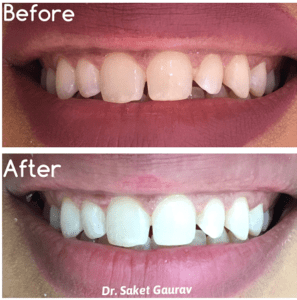
Your smile creates an immediate, subconscious, visual impact on people you meet. A brighter smile gives the impression of youth, vitality, radiant health, happiness, and warmth. A bright smile is perceived as a healthy smile. Tooth whitening is an increasingly popular cosmetic dentistry procedure that can make a massive difference on the appearance of your smile.

Causes of Tooth Discoloration
As we get older, our teeth naturally darken and discolor due to factors such as diet, age, lifestyle-smoking habits, drugs (like tetracycline), grinding (due to stress), trauma and even genetics. Tooth whitening can make your teeth look younger, cleaner and healthier.

Types of Tooth Stains
Extrinsic stains are those that appear on the surface of the teeth as a result of exposure to dark-colored beverages, foods and tobacco, and routine wear and tear. Superficial extrinsic stains are minor and can be removed by prophylactic dental cleaning and whitening.
Intrinsic stains are those that form on the interior of teeth. Intrinsic stains result from trauma, aging, exposure to minerals (like tetracycline) during tooth formation and/or excessive ingestion of fluoride. There are alternative cosmetic solutions to treat intrinsic staining, such as dental veneers and crowns.

Types of Teeth Whitening
There are various ways to whiten your teeth, but the two most common are office whitening and the home whitening systems-
Office Teeth Whitening
Professional tooth whitening in a dental office is the preferred whitening method because it is more effective. Even though stronger agents are applied, the rest of the mouth, including the gums, is protected from these materials. The best whitening systems feature a buffer in the gel that protects the tooth enamel from damage, are extremely effective, and can transform teeth color in a single visit. Your teeth can literally brighten up to 5 shades in about an hour.
Tooth whitening can last for 6 months or more, depending on how well you take care of your teeth.
Home Teeth Whitening Systems
They can either be used as a primary whitening option or as secondary option after office whitening to maintain the whitening result for longer time. Dentist’s supervision is must before you start using Home tooth whitening methods. They include whitening strips, paint-on tooth gel, mouth trays with gel. These are typically safe products.

Teeth Whitening Risks
Teeth whitening treatments are considered to be safe when procedures are followed as directed. However, there are certain risks associated with bleaching that you should be aware of:
Sensitivity: Bleaching can cause a temporary increase in sensitivity to temperature, pressure and touch.
Whitening sensitivity lasts no longer than a day or two, but in some cases may persist up to a month. It is recommended to use desensitizing toothpaste for few days after a whitening session.
Gum irritation: You might experience some degree of gum irritation resulting from the bleach concentration or from contact with the whitening trays. Such irritation typically lasts up to 1-2 days.

Maintaining Your Teeth Whitening Results
To extend the longevity of newly whitened teeth, it is recommended

  • To use home whitening  once to twice a month
  • Avoiding dark-colored foods and beverages for at least a week after whitening.
  • Whenever possible, sipping dark-colored beverages with a straw.
  • Practicing excellent oral hygiene – brushing and flossing after meals and at bedtime.


Tooth brushing Mistakes

Dr.Saket Gaurav
B.D.S.(India), PGD.Ortho, PGDAD(Cosmetic)
International Dental Practitioner
DENTAL MAKEOVER, Delhi NCR.

Tooth brushing is such an ingrained habit, few people think twice about it. But as with any habit, you can get sloppy, and that can lead to cavities and gum disease.

1: Not Using the Right Toothbrush
Consider the size of your mouth when picking a toothbrush. If you are straining to open wide enough to let the brush in, the brush is probably too big. The handle has to be comfortable. It should feel comfortable as you are holding and the toothbrush head should be small so that it reaches the very last tooth as well. The more comfortable it is in your mouth and your hand, then the more likely you will use it and use it properly.

2: Not Brushing Often Enough or Long Enough
Softly brushing your teeth at least twice a day is recommended. ”Three times a day is best.” With too much time between brushings bacterial plaque will build up, boosting the risk of gum inflammation and other problems.
Brushing should last at least two minutes, three minutes is even better. Most people fall short of both time lines. It is often recommended to divide the mouth into quadrants and spend 30 seconds a quadrant. Some electric toothbrushes include built-in timers.

3: Not Picking the Right Bristles
Some toothbrushes have angled bristles, others straight. So is one type better? NO…..”It’s more related to technique than the way the bristles come out. What is important when buying a toothbrush? Bristles that are too stiff can aggravate the gums. It is recommended to use a soft-bristled brush. Bristles should be sturdy enough to remove plaque but not hard enough to damage the teeth when used properly.

4: Not Brushing Correctly
Long horizontal strokes along the gum line can lead to abrasions. Aim your bristles at the gum line at a 45-degree angle and do short strokes or vibrations. Softly brush up and down your teeth, not across your teeth. The strokes should be vertical or circular, not horizontal.
Be sure to brush outer and inner tooth surfaces, the chewing surfaces, and your tongue.

5: Brushing Too Often or Too Hard
While brushing your teeth three times a day is ideal, but brushing twice is must. Excessive brushing could expose the root of the tooth to irritation, and that could in turn irritate the gums. Brushing vigorously can also erode tooth enamel. The trick is to brush very gently for two to three minutes.

6: Skipping Inner Tooth Surfaces
Most people forget to brush the inner surfaces of teeth — the surface that your tongue presses against.
The plaque you can’t see is just as important to remove as the plaque you can see.
The most commonly skipped area, dentists say, is the inner surface of the lower front teeth.

7: Starting in the Same Place Each Time
Many people start brushing the same part of their mouth over and over. Start in a different place so that
You don’t get lazy in the same area of your mouth.

8: Not Following Up With a Rinse
Bacteria can grow on an un-rinsed toothbrush. Then, the next time you brush your teeth, you may actually put old bacteria back in your mouth. Rinsing the toothbrush after you brush will help remove any leftover toothpaste, too.

9: Not Letting the Toothbrush Dry
If you have a toothbrush that’s perpetually moist, it will cultivate more bacteria.
If the bristles stay soggy, you can shape-out them as you use the brush. Or it might be a breeding ground for bacteria. It’s a good idea to shake out the moisture, and then recap it with a cap that allows air in.

10: Not Changing the Toothbrush Often Enough
It is recommended to get a new brush every three months or even sooner if the bristles look frayed. Once the bristles lose their normal flexibility and start to break apart, change your toothbrush. Some brushes have colored indicators that alert you when they need replacing.

Which is the better toothbrush: Electric or manual?

Dr.Saket Gaurav
B.D.S.(India), PGD.Ortho, PGDAD(Cosmetic)
International Dental Practitioner
DENTAL MAKEOVER, Delhi NCR.

From the time we’re young, we’re taught that using a toothbrush regularly is one of the best ways to keep our teeth and gums healthy. But which toothbrush is best?

The earliest toothbrushes were actually small twigs people rubbed against their teeth to get rid of food bits and other pieces of debris. Over hundreds of years it evolved, beginning to feature bristles made from boar’s hair. In the late 1930s, when toothbrushes with nylon bristles were first invented, consumers choosing a toothbrush didn’t have many options. Now, the story’s completely different. Most stores that sell oral hygiene products now have an extensive collection of different types of toothbrushes on their shelves, including manual (disposable) and powered (electric) varieties.

Let’s take a look at the Pros and Cons of the two and find out.

Manual Toothbrush
Pros

  • Thoroughly clean teeth with proper brushing technique. Brushing only takes 2 minutes and you can most definitely keep your teeth at a grade A+ level with a manual toothbrush.
  • Multiple toothbrush styles, bristles, heads and colors to choose from. You have the ability to choose soft bristles if you have sensitive gums, and a smaller head if you have a smaller mouth. Some brands even make special prints on toothbrushes for children. Nevertheless, you’ll never be short of options with manual toothbrushes.
  • Easy to travel with. All you need is a toothbrush case and you’re all set to go for your trip. No need to worry about batteries or charging outlets.
  • No batteries or charging.
  • Inexpensive and often free whenever you make a trip to your dentist. Keep in mind that you should ditch your toothbrush after about 3 months of use.

Cons

  • More work.
  • No timing. Manual toothbrushes require you to guess how long your brushing session will last (unless you set a two-minute timer).

Electric Toothbrush
Pros

  • Easy to use. With a powered toothbrush, all you need to do is place the toothbrush at a 45° angle and let the toothbrush do all the work.
  • Less work for better results. Studies have shown that electric toothbrushes do a better job of cleaning your mouth and removing plaque and debris.
  • More fun to use for children. Children like to take the easy way out on chores. If a child never brushes their teeth because they don’t want to, try having them use an electric toothbrush. It’s less work, it tickles their teeth, and the timer will let them know they’re all done! It’s a lot easier (and more fun).
  • Built in timer. Electric toothbrushes use a built in timer that stops the toothbrush once two minutes are up; no more guessing!

Cons

  • Charging. You’ll either have to charge your toothbrush or replace its batteries.
  • Cost. Electric toothbrushes cost significantly more than a manual toothbrush. There are several types of powered toothbrushes but be prepared to pay more than you usually do.
  • Not as easy to travel with. Traveling with an electric toothbrush can be a hassle. They are bulky and bringing a charger along doesn’t help with room constraints.
  • Easy to break. Dropping your toothbrush can be fatal. You have to be more careful whenever using an electric toothbrush.

One last thing to point out: there have been a few studies that prove electric toothbrushes remove statistically significant more plaque compared to manual toothbrushes and are better at fighting gum disease. Despite the studies, your oral health will remain healthy (despite which type of toothbrush you use) as long as you consistently take care of your teeth. If you are on the fence of buying a powered toothbrush, talk to your dentists the next time you go for a checkup.