tooth sensitivity

Effects of Smoking on your oral health

Dr.Saket Gaurav
B.D.S.(India), PGD.Ortho, PGDAD(Cosmetic)
International Dental Practitioner
DENTAL MAKEOVER, Delhi NCR.

Most often while watching television programs or movies or on the tobacco products we get to see the warning messages concerning their health effects. They have been implemented in an effort to enhance the public’s awareness of the harmful effects of smoking. Warning like Smoking can kill, Smoking seriously harms you and others around you, Cigarettes causes lung cancer, Smoking can lead to blood circulation disorders and causes impotence, This product can cause mouth cancer etc. In general, warnings used in different countries try to emphasize the same messages. You have most likely heard several times again and again that smoking and chewing tobacco products can have a serious impact on your oral health. But what does smoking actually do to your mouth and oral health? Reasons why smoking is one of the most destructive habits when it comes to your oral health and the serious health risks that come with it.

Oral cancer– Tobacco products such as cigarettes, pipes, chewing tobacco, and others are highly carcinogenic. The chemicals found in these products have been cited as a leading cause of many cancers affecting mouth, lip, tongue, gums and throat. There are numerous chemicals found in tobacco smoke, including several known to cause cancer. Oral cancer is especially dangerous in those who have it are unaware of it in the early stages since it does not produce painful side effects until it has spread. Oral cancer can take many forms including unexplained bumps, bleeding, swelling, numbness, pain, and difficulty swallowing.

Gum disease– Smoking causes decreased levels of oxygen in the blood leads to a weakened immune system and leaves your mouth vulnerable to infection. This means that bacteria found in your mouth can more easily build-up and infiltrate your gums. The bacteria can quickly destroy gum tissues, causing it to recede and become loose and unhealthy. The gums help to anchor teeth in place, so when the gum is compromised, it further also damages the bone causing the teeth to become loose and potentially fall out. When gum disease progresses it can affect the bones and surrounding tissues, causing them to break down, too. Smokers are two times more likely to contract gum disease than non smokers. Smoking is a cause of periodontitis, a common dental disease. Its symptoms may include infected gums, loss of the jawbone that supports the teeth and deep spaces forming around the teeth (periodontal pockets)

Cavities – Considering the increased plaque and gum problems caused by smoking, you’re also at higher risk for tooth decay. If you smoke, you’re putting your mouth at risk for three times as many cavities as those who don’t. Because the chemicals in tobacco products weaken the tooth’s protective enamel, teeth become more susceptible to bacteria, acids, and other destructive substances. With no protective layer, these substances cause decayed teeth and eventually it might spread down to the tooth root. This can be extremely painful and can cause teeth to become loose, requiring removal, and even falling out. This decay can also lead to infection with swelling and severe pain. Smoking causes a lack of oxygen in the blood, which your body needs in order to fight these infections.

Tooth sensitivities– Because smoking weakens or erodes tooth enamel, smoker’s teeth are often vulnerable and can become extremely sensitive to hot and cold temperatures. This can be quite painful and very restricting when it comes to food and drink.

Bad breath– It’s no surprise that smokers have bad breath and it’s not the kind you can get rid-off it, with a quick breath mint or chewing gum. Many chemicals pass through your oral cavity every time you smoke and many of them end up collecting on the surfaces inside your mouth. Smoking also contributes to bad breath by drying out your mouth, which can trigger gum infection and even irritate your sinuses.

Stains– Smoking is well known for the yellowing effect it has on teeth. This discoloration is actually stains left by the nicotine and tar found in cigarettes and other tobacco products. Over time, this discoloration can seep into tiny cracks in the tooth enamel. That means that after several years of smoking, the staining may well be permanent.

Delayed healing – After a tooth extraction or other oral surgery can be seen after several years of smoking as it also cause change in the immune response.

Taste and smell– Often use of tobacco products over a long period of time may result in altered taste and smell sensation.

Tobacco users especially should visit their dentist regularly to have their oral health monitored closely. It’s important to keep in mind that the only truly effective treatment in restoring the health of a smoker’s mouth is to stop smoking. It usually takes a few times before you successfully quit smoking. Consult with your dentist or physician about nicotine replacement therapy. If you’ve just had your dental cleaning it’s a great time to quit, because your mouth feels fresh and clean.

 

Are you using the right Toothpaste?

Dr.Saket Gaurav
B.D.S.(India), PGD.Ortho, PGDAD(Cosmetic)
International Dental Practitioner
DENTAL MAKEOVER, Delhi NCR

We are lucky that in today’s world due to advancement in science, research and technology we get the best. We get options to choose best product according to our needs. When it comes to treatment again we get options most of the times. Today we are going to discuss about toothpastes, something very common and used every day by most of us. The number of toothpaste options is available on the market these days, its huge and it can be confusing making a decision about the best one to buy. There are toothpastes that strengthen gums, whiten teeth, control tartar and contain fluoride etc. Which one is best for you and which one should you purchase? This discussion about the various toothpastes on the market should help you choose the right one for you.

Anti Plaque toothpaste: These toothpastes control plaque accumulation on teeth, which reduces the toxic effects of the bacterial toxin on the tooth surrounding tissues, thereby reduces the chances of getting gum disease. Plaque if not cleaned properly hardens into tartar over time. Tartar/Plaque control toothpastes contain ingredients such as pyrophosphates and zinc citrate as well as an antibiotic and antifungal agent called triclosan, which helps to kill bacteria

Fluoridated toothpaste: Fluoride is the most important ingredient to look for when selecting toothpaste. It is a natural mineral that has contributed to a rapid decrease in tooth decay. Fluoride reduces the decay of tooth enamel by the formation of fluorapatite and its incorporation into the dental enamel. The fluoride ions reduce the rate of tooth enamel demineralization and increase the rate of remineralization of teeth at the early stages of cavities. There are many developed countries where the public water supply contains right amount of fluorides in it. When buying water for drinking we should always select the one which contains fluoride in it. Using a toothpaste containing fluoride will help you maintain healthy teeth.

Desensitizing toothpastes: For sensitive teeth, to either hot or cold food items. It helps in reducing the sensitivity on regular use. These toothpastes contain potassium nitrate, strontium chloride, sodium fluoride and other contents which help to block the nerve pathway, hence reducing the sensitivity. But make sure you visit your dentist if the sensitivity worsens.

Whitening toothpaste: There are a number of whitening toothpastes now on the market for people who are concerned about improving the whiteness of their teeth. Whitening toothpaste contains abrasive particles and chemicals that act to polish teeth and help remove stains. This is one of the reasons that it shouldn’t be use over used. If you are concern about whitening your teeth visit your dentist and get the best and safe advices for teeth whitening.

Natural toothpaste: For those who are uncomfortable with brushing with chemicals, natural toothpastes are an option. These toothpastes are made from herbal extracts and other natural ingredients, such as essential aloe-vera, oil of ginger, seaweed extract etc. The health claims of these toothpaste have not been clinically proven. Thus, it is important to check if these toothpastes contain fluoride, a proven active ingredient for the prevention of tooth decay already discussed above. Some people allergic to regular toothpaste may use natural toothpastes id recommended by dentist.

Kids’ toothpaste: Kids toothpastes are available in various stores according to the age groups. It’s a good idea to use it as recommended by the makers. It comes in different age groups according to the need of fluoride in particular age group. The fluoride content in toothpaste for younger kids will be less as compared to teenagers and adults.

Smokers Toothpaste: People who smoke often suffer stained teeth because of tar deposits. Some smokers toothpastes use stronger abrasives to remove these stains. Vigorous brushing with more abrasive pastes may damage the enamel over time. So instead of using hard bristled toothbrush and brushing hard visit your dentist for opinion and try to cut down smoking.

Fluoride is the most important ingredient to look for in toothpaste. Always avoid using whitening toothpaste if you have sensitive teeth. Make sure that the toothpaste you are buying is approved by some dental association. The toothpaste should not contain natural sweetening agent, it should contain artificial sweetening agents like sorbitol etc. Consult your dentist for their recommendations for any specific dental concerns you have.

Dental Emergency- What to do…

Dr.Saket Gaurav
B.D.S.(India), PGD.Ortho, PGDAD(Cosmetic)
International Dental Practitioner
DENTAL MAKEOVER, Delhi NCR

Accidents do happen and when it happen it’s important to act quickly. Head and neck region is one of the most sensitive and also the most affected area. It’s important to know what to do in a dental emergency because knowing what to do when one occurs can mean the difference between saving and losing a tooth. No matter what kind of emergency it is, it is important to see your dentist as soon as possible after the incident has occurred. Here are some do’s and don’ts; which you should do in the most common dental emergencies:

Chipped or cracked tooth: If you crack a tooth, immediately rinse your mouth with warm water to clean the area. If you chip a tooth, try and save any broken pieces. There is a strong possibility that swelling will occur, so cold compression in the affected area can be used to minimize this. Make an appointment with your dentist as soon as possible so that all the risks can be ruled out and proper steps can be taken in order to save the tooth.

Knocked out tooth: It is important to keep the tooth that has been knocked out moist at all times to keep it healthy. If you can, place it back in the tooth’s socket or inside your mouth between your check and gums. This is the best environment for the tooth to be in. If you are unable to do this, place it in a jar of milk and get to your dentist as soon as possible. There is the highest possibility of your tooth being able to be saved if you see your dentist within one hour of the incident occurring.

Jaw Fracture: If you suspect that your jaw might be broken, immediately apply a cold compress to reduce inflammation. Immediately go to your dentist or the emergency department at the hospital to get an x-ray.
Dislodged Tooth: Try to relieve pain by applying a cold compress to the outside of the mouth or by taking an over-the-counter pain medication. See your dentist as soon as possible.

Soft tissue injuries: These are injuries to the soft tissue inside your mouth such as your tongue, cheeks, lips and gums, which cause bleeding. Your first priority is to control the bleeding by rinsing out your mouth with water, applying pressure to the affected area with a moistened piece of gauze and reducing swelling by applying a cold compress. If the bleeding does not stop, go directly to your dentist or doctor and continue to apply pressure on the area until you can be treated.

For toothaches: Rinse the mouth with warm water to clean it out. Gently use dental floss to remove any food caught between the teeth. Clove oil dampen cotton pellet on the affected area also helps. If pain persists take some analgesic and see your dentist.

Investigations like x-rays may be taken to evaluate the extent of damage; also it helps in treatment planning. Few precautions can be taken like using sports guard while playing outdoor games, avoid consuming too hot or too cold food items and not using teeth to cut things or open bottles to be on safer side. Always remember, when you have a dental emergency, it’s important to visit your dentist as soon as possible.

How to use- MOUTHWASH


Dr.Saket Gaurav
B.D.S.(India), PGD.Ortho, PGDAD(Cosmetic)
International Dental Practitioner
DENTAL MAKEOVER, Delhi NCR

When we talk about good oral hygiene, three things come on our mind brushing, flossing and using mouthwash. These are often told by the dentists as well. Today we are going to talk about mouthwash. Mouthwash is a part of a good daily oral hygiene practice. Mouthwashes are beneficial, in removing food particles left in between and on the teeth even after brushing and flossing. Since, it’s a liquid; it can be reach where a tooth brush and floss cannot.

While mouthwash is not a substitute for proper brushing, it can help with a number of oral health issues like cavity protection, bad breath management and in therauptic uses. There are various types of mouthwash available. Broadly, mouthwashes containing fluoride can help in preventing the formation of tooth decay. Alternatively, antiseptic mouthwashes can help reduce the bacteria that cause gum disease and decay. Other mouthwashes may help reduce teeth sensitivity.

There are few myths regarding the use and effects of mouthwash. Let’s discuss it.

Firstly it’s a very common one, mouthwashes cures bad breath. Yes, mouthwash may temporarily cure stinky breath, but it’s not a permanent solution. There can be multiple reasons for bad breath like the food you consume, or if you have any respiratory infection or some systemic disease like diabetes etc or you have lot of plaque and tartar build up all over your mouth. So, freshening your mouth with mouthwash won’t help for long. Better see your dentist to know the exact cause of bad breath and then target the real problem.

Secondly, all mouthwashes are the same. Not really, as discussed before, there are different mouthwashes for different needs. In general, mouthwash can be classified as, regular or therapeutic uses. Rinsing with a regular mouthwash will loosen bits of food from your teeth, lessen bacteria in your mouth, temporarily reduce bad breath and leave a refreshing taste in your mouth. On the other hand, therapeutic rinses contain additional active ingredients such as essential oils, chlorhexidine, fluoride, betadine etc which has been proven to reduce plaque, fight cavities, reduce teeth sensitivity or help in gingival healing by keeping the bacterial count minimum.

You must have heard people saying, anyone can use the mouthwash and mouthwash is harmless. Well that’s not true. Many mouthwashes contain a high amount of alcohol. This can cause dry mouth, which is a cause of bad breath, and irritate oral tissues. In some people, the alcohol can cause sensitivity to the root surfaces of the teeth. There have also been studies suggesting a link between alcohol-containing mouthwash and oral cancer on long term use. Also, Long-term use of alcohol containing mouthwashes can kill ‘good’ bacteria and should never be given to children. Alcohol-free mouthwashes are also available. But other ingredients can cause side effects, too. Many can stain your teeth or cause a burning sensation, and therefore it isn’t recommended for long-term use. Mouthwash is not meant to be ingested, so it may cause problems if accidentally swallowed. It’s not usually recommended for young children before the age of six. This is because most children would swallow the mouthwash instead of spitting it out. Most mouthwashes contain fluoride and few contain alcohol both of these are not advisable to swallow even in trace amounts. Yet there are few mouthwashes available that are specifically made for children because they contain no alcohol and are fluoridated in right amounts. This results in protection against cavities with safety.

Mouthwash cannot replace brushing and flossing. Yes, it cuts back the level of bacteria in your mouth. But not for the whole day if brushing and flossing is not done. Plaque must be removed by a physical action and that’s exactly the role of flossing and brushing. Regular flossing and brushing with a soft-bristled toothbrush will do a much more effective job of removing plaque and debris than mouthwash alone. Research shows that adding a rinse with mouthwash to your oral care routine can in fact improve the overall cleanliness of your mouth and help keep gum inflammation at bay. But mouthwash is usually considered an add-on, not a replacement for brushing and flossing.

The best way to use mouthwash is to gargle or rinse just for a few quick seconds and then spit. Most mouthwashes are at their most effective when in contact with your mouth tissues for 30 seconds per use. Keeping the mouthwash for too long in mouth can cause loss of taste sensation for few days and may irritate the gums and soft tissues all over. If you are using the mouthwash on regular basis you may dilute the mouthwash with water in 1:1 ratio if recommended or needed.

Ask your dentist for advice about the best mouthwash for you. Read and follow the instructions on the label, looking for how much to use and for how long to rinse with the mouthwash. Always remember mouthwash isn’t a short-cut.

Tooth Sensitivity- Causes and remedies

Dr. Saket Gaurav
B.D.S.(India), PGD.Ortho, PGDAD(Cosmetic)
International Dental Practitioner
DENTAL MAKEOVER, Delhi NCR

If drinking a glass of cold water, eating ice cream or drinking hot coffee gives you a painful shock like unpleasant sensation or experience, then for sure its sensitivity. Tooth sensitivity is one of the most common issue troubling mostly youngsters and adults. In certain cases the teeth sensitivity is also aggravated by consuming sweet, acidic food items or even with air on few occasions.

A healthy teeth, is made up of three different layers-
Enamel: The outer most layers, very hard and highly mineralized layer protect the crown portion of the teeth. No nerve innervations present in this layer.
Dentine: It’s the second layer beneath enamel and is less dense than enamel and contains microscopic tubules (small hollow tubes or canals).
Pulp: The innermost layer mainly comprised of blood vessels and nerve innervations.

Reason for sensitivity: When outer protective layer of enamel is lost these tubules allow hot, cold, acidic or sticky foods to reach the nerves or pulp inside the tooth. Dentin may also be exposed due to gum recession. This results in hypersensitivity.
The good news is that if precaution, care and dentist consult is taken at the right time it can help you get away with tooth sensitivity. Here is a list of the most common causes of tooth sensitivity with tips on what you can do to minimize the pain.

Decayed tooth or Cavities: The virulent bacteria those are present in tooth decay produce acid, which accelerates the enamel breakdown resulting in cavity formation. Once the cavity starts getting deeper and deeper and reached close to the pulp (nerves), tooth sensitivity or pain may be experienced. It is very important that you see your dentist if you suspect you have decay in your teeth. You will be advised for tooth fillings, tooth crown or root canal treatment.

Gum disease: Using a very hard bristled brush, applying extra force during brushing and smoking may cause recession of gums, which is one of the most common causes of tooth sensitivity. There are dental procedures that can treat gum disease, the already receded gums as well as changes in oral health habits such as careful brushing and quitting the habit of smoking can help.

Teeth grinding: People suffering from Bruxism (the grinding, of the teeth most commonly during sleep or awake) can experience a wearing down of the enamel on their teeth. This results in exposing the dentin layer, which leads to the tooth sensitivity. Using a mouth guard might help.

Citrus/Acidic foods: Consuming to much of citrus and acidic food items causes erosion of the enamel layer leading to teeth sensitivity. Try to avoid foods such as citrus fruits, pickles and tomato sauce and other acidic food items. Use of desensitizing toothpaste might help.

Plaque: a sticky deposit on teeth in which bacteria proliferate. Excessive plaque accumulation on the tooth surface may lead to tooth decay and once this occurs, your teeth may become sensitive. Maintaining good oral hygiene habits and visiting your dentist every 6 months for cleanings and check up will help in keeping a healthy oral hygiene.

Cracked/Fractured tooth: Trauma may result in the fracture or crack of the tooth, once the fracture line gets deeper involving the dentine and pulp, you may experience sensitivity or pain. It is important to consult with your dentist to discuss treatment options which will depend on the extent of damage, treatment like tooth fillings, tooth crowning or root canal treatment if the nerves are involved may be advised.

Applying force while brushing: Brushing with too much force/pressure can wear away the enamel layer, exposing the soft dentin underneath leading to sensitivity. You should try to brush more gently or with a soft bristled toothbrush. If the dentin layer is already exposed, consult your dentist for treatment options.
Excessive use of Whitening toothpaste: Some of us think that using the whitening toothpaste will whiten the teeth, that’s true it does whiten but the chemicals present in it also causes chemical erosion leading to wearing away of the enamel layer and resulting in teeth sensitivity. You may switch to fluoride or desensitizing toothpaste instead. If the discomfort persists then consult your dentist.

Mouthwashes: Few mouthwashes contain alcohol or other chemicals that can aggravate sensitive teeth. Make sure that you opt for a non-alcoholic standard mouthwash.

Recent dental procedure: it is normal to experience increased tooth sensitivity after a dental procedure like tooth fillings, cleaning etc. This is nothing to be concerned about unless the sensitivity does not disappear on its own. But if it doesn’t then consult your dentist.

Soft DRINKS and their effect on ORAL HEALTH

Dr.Saket Gaurav
B.D.S.(India), PGD.Ortho, PGDAD(Cosmetic)
International Dental Practitioner
DENTAL MAKEOVER, Delhi NCR.

Commonly it is called “soda” or “soft drink”, different words are used to identify a carbonated/aerated, sugary cold drink or soft drink which is available in various flavors and different brand names. The advert says drinking it is fun, happiness, fact of life, winning mantra, living mantra, the way you should be etc, etc and what not. But these carbonated/aerated soft drinks can lead to not only oral but also general health issues.

Soft drinks and packed juices are very common and easily available dietary source today, which is consumed by most of us anytime in a day or many times in a day, once consumed acids & acidic sugar products and by-products in it softens the enamel (outer most layer of the tooth) which is also supposed to be hardest and most highly mineralized substance in human body contributing to the formation of cavities on the tooth surface and also erosion of the enamel layer leading to tooth sensitivity. In certain cases, this affected enamel caused by soft drinks when combines with inefficient and improper brushing and poor oral hygiene may lead to the gum disease and tooth loss. Because of the high sugar, sodium and caffeine content in soda, it dehydrates the body and over a long period of time can cause chronic dehydration. However, the sugar-free drinks are also not very safe as the acidic potential can still cause problems like dehydration and enamel loss, but they are less harmful in comparison. It appears that increased soft drink consumption is a major factor that contributes to obesity, kidney damage, osteoporosis, elevated blood pressure (on regular use). Soft drinks also have long been suspected of leading to lower calcium levels and higher phosphate levels in the blood. When phosphate levels are high and calcium levels are low, calcium is pulled out of the bones, which causes weakening of the bones.

Soft drink consumption has increased dramatically across the world, especially among children and teenagers. Everyone in spite of their age and gender can be benefitted from reducing the number of soft drinks they consume. Beverages containing less sugar and acid such as water, milk and 100 percent pure fruit juice, fresh juice is even better. Drink them yourself and encourage everyone including kids to do the same. Never drink soft drinks empty stomach as they may harm the gastric mucosa (inner layer of the stomach). Ask your dentist about fluoride application in the form of a foam, gel or rinse, which can be done for all age groups. Make sure that after consuming a soft drink, you flush your mouth with water to remove acids and save tooth from getting exposed to acids for too long. Since, fluoride reduces cavities and strengthens tooth enamel, so brush with fluoride-containing toothpaste. Also rinsing with a fluoride mouthwash also can help. Your dentist can recommend a higher fluoride containing toothpaste depending on the severity of the problem.

TEETH WHITENING

Dr.Saket Gaurav
B.D.S.(India), PGD.Ortho, PGDAD(Cosmetic)
International Dental Practitioner
DENTAL MAKEOVER, Delhi NCR.

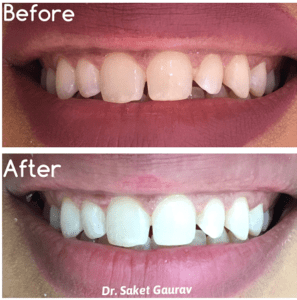
Your smile creates an immediate, subconscious, visual impact on people you meet. A brighter smile gives the impression of youth, vitality, radiant health, happiness, and warmth. A bright smile is perceived as a healthy smile. Tooth whitening is an increasingly popular cosmetic dentistry procedure that can make a massive difference on the appearance of your smile.

Causes of Tooth Discoloration
As we get older, our teeth naturally darken and discolor due to factors such as diet, age, lifestyle-smoking habits, drugs (like tetracycline), grinding (due to stress), trauma and even genetics. Tooth whitening can make your teeth look younger, cleaner and healthier.

Types of Tooth Stains
Extrinsic stains are those that appear on the surface of the teeth as a result of exposure to dark-colored beverages, foods and tobacco, and routine wear and tear. Superficial extrinsic stains are minor and can be removed by prophylactic dental cleaning and whitening.
Intrinsic stains are those that form on the interior of teeth. Intrinsic stains result from trauma, aging, exposure to minerals (like tetracycline) during tooth formation and/or excessive ingestion of fluoride. There are alternative cosmetic solutions to treat intrinsic staining, such as dental veneers and crowns.

Types of Teeth Whitening
There are various ways to whiten your teeth, but the two most common are office whitening and the home whitening systems-
Office Teeth Whitening
Professional tooth whitening in a dental office is the preferred whitening method because it is more effective. Even though stronger agents are applied, the rest of the mouth, including the gums, is protected from these materials. The best whitening systems feature a buffer in the gel that protects the tooth enamel from damage, are extremely effective, and can transform teeth color in a single visit. Your teeth can literally brighten up to 5 shades in about an hour.
Tooth whitening can last for 6 months or more, depending on how well you take care of your teeth.
Home Teeth Whitening Systems
They can either be used as a primary whitening option or as secondary option after office whitening to maintain the whitening result for longer time. Dentist’s supervision is must before you start using Home tooth whitening methods. They include whitening strips, paint-on tooth gel, mouth trays with gel. These are typically safe products.

Teeth Whitening Risks
Teeth whitening treatments are considered to be safe when procedures are followed as directed. However, there are certain risks associated with bleaching that you should be aware of:
Sensitivity: Bleaching can cause a temporary increase in sensitivity to temperature, pressure and touch.
Whitening sensitivity lasts no longer than a day or two, but in some cases may persist up to a month. It is recommended to use desensitizing toothpaste for few days after a whitening session.
Gum irritation: You might experience some degree of gum irritation resulting from the bleach concentration or from contact with the whitening trays. Such irritation typically lasts up to 1-2 days.

Maintaining Your Teeth Whitening Results
To extend the longevity of newly whitened teeth, it is recommended

  • To use home whitening  once to twice a month
  • Avoiding dark-colored foods and beverages for at least a week after whitening.
  • Whenever possible, sipping dark-colored beverages with a straw.
  • Practicing excellent oral hygiene – brushing and flossing after meals and at bedtime.


Dental Health for Women

Dr.Saket Gaurav
B.D.S.(India), PGD.Ortho, PGDAD(Cosmetic)
International Dental Practitioner
DENTAL MAKEOVER, Delhi NCR.

Everyone needs to look after their oral health, but for women, specific periods in their life can affect their oral health significantly. Changes in female hormone levels during puberty, menstruation, pregnancy and menopause exaggerate the way gums react to plaque. Since, gum disease is usually painless, many women may not even realize they have it until it reaches an advanced state. As, gum disease is a bacterial infection, it can enter the bloodstream and may be a factor in causing other health complications like:

  • Heart disease: People with gum disease may be more at risk for heart disease and have nearly twice the risk of having a fatal heart attack.
  • Stroke: Few studies found a casual relationship of oral infections as a risk factor for stroke.
  • Diabetes: People with diabetes are more likely to have gum disease and may make it more difficult for diabetics to control their blood sugar. Gum disease may also be a risk factor for diabetes, even in otherwise healthy individuals.
  • Respiratory problems: Bacteria that grow in the oral cavity can travel to the lungs causing respiratory disease such as pneumonia – especially in people with gum disease.
  • Pregnancy outcomes: Pregnant women who have gum disease may be more likely to have a baby born too early or too small. Gum disease may also trigger increased levels of biological fluids that induce labor.

Women can expect their dental health to change during these specific periods of their life in the following ways:

  • Puberty: The increase in estrogen and progesterone causes blood vessels to dilate which can affect gums and can cause bleeding, swelling and redness. The changes in hormones affect the bacteria in the mouth at this time, meaning that cavities and bad breath can develop. Ulcers are also more common in teenagers than children.
  • Menstruation: In the lead up to their period, some women experience swollen or sensitive gums that are prone to bleeding, while others can experience mouth ulcers or cold sores. Once menstruation begins, these symptoms commonly disappear.
  • Oral contraceptive: Taking an oral contraceptive is common for many women. The synthetic hormones in these tablets can cause gingivitis, an inflammation of the gums, which results from an excessive build up of plaque.
  • Pregnancy: The significant changes in hormones during pregnancy make oral health care a priority for women during this time. Gingivitis is, again, common in pregnant women, but also ‘pregnancy tumours’, which are non-cancerous, benign growths that develop when swollen gums become irritated. Normally, these tumors will naturally shrink and disappear after the baby’s birth, although if they interfere with brushing or are uncomfortable, the dentist may decide to remove them.
  • Lactation: There are many benefits of breastfeeding for both mother and baby, but the period of lactation can also negatively impact a woman’s oral health. Adapting to life with a new baby can often mean that women skip brushing and flossing their teeth, resulting in an increased likelihood of cavities and gum disease developing. The increase in stress and tiredness can also cause Bruxism to develop, which is the grinding or clenching of teeth during sleep. This can result in headaches, neck and jaw pain, or teeth cracking.
  • Menopause: There are many possible changes that can occur in a woman’s mouth during menopause. These include burning mouth syndrome, dry mouth, gingivitis and mucosal changes which can result in changes in the appearance of gums and can cause them to bleed easily.

It is very important to ensure that women maintain their good daily dental hygiene so that the teeth and gums are at their best to deal with these hormonal fluctuations. To reduce this plaque build-up on teeth following care should be taken:-

  • Brush two to three times daily and floss once a day
  • Choose health food and not high-sugar foods
  • Avoid snacking
  • Drink mainly water and milk. Avoid adding sugar to drinks
  • Chew sugar free gum after starchy and high sugar foods to help stimulate saliva
  • Have regular check-ups at your dentist, to check your teeth and gums to detect any early problems and remove plaque and calculus build-ups to keep your mouth healthy.

Tooth-Friendly Diet

Dr.Saket Gaurav
B.D.S.(India), PGD.Ortho, PGDAD(Cosmetic)
International Dental Practitioner
DENTAL MAKEOVER, Delhi NCR.

Regular brushing and flossing remain your best protection against tooth decay and gum problems. But a tooth-friendly diet can also help keep your smile bright and your gums healthy.
A balanced diet, tooth that provides adequate nutrition can help promote healthy teeth. Many nutrients, including vitamin C, vitamin D, calcium and others, are essential to oral health.
Along with eating a healthy diet, it’s smart to limit snacking. The flow of saliva cleanses the mouth and teeth, removing cavity-promoting foods. But if you snack all the time, you expose your teeth again and again to foods that can erode enamel. The best advice to prevent cavities is to limit your eating to three meals a day. If you snack, reach for a food that’s less likely to cause tooth decay. What are your best choices? Here are the foods to choose — and foods to avoid — in order keeping your teeth healthy and your smile bright.

Foods to Avoid for Healthy, Sparkling Teeth
Sugary drinks: When bacteria in the mouth break down simple sugars, they produce acids. These acids can erode tooth enamel, creating pits where cavities can form. Sugary drinks, including soft drinks and fruit drinks, consist almost entirely of simple sugars. Some studies have singled out sports drinks as the worst offenders for eroding enamel.

Candy and highly-sweetened snacks: Most candies are loaded with sugar, which increases acid levels from bacteria in the mouth. Sticky and gummy candies pose the biggest threat, since they adhere to teeth, making it hard for saliva to wash them away.

Some starchy foods: Starches also raise acid levels from bacteria in the mouth, eroding tooth enamel. Starchy foods include breads, pastas, rice, and potatoes. The more refined or cooked a starch, the more likely it is to raise acid levels in the mouth. Raw starches in the form of vegetables tend not to endanger tooth enamel.

Sugary breakfast cereals: Foods that contain a mixture of sugar and starch should be avoided. Snacks such as ready-to-eat breakfast cereal, pastries, and many processed foods may be bad for teeth. The combination of starch and sugar is more likely to get stuck in plaque between teeth.

Coffee, tea, and red wine: Sweetened tea or coffee raises acid levels, weakening enamel. And because they are often sipped slowly, acid levels may remain high over a longer period of time, raising the danger. Coffee, tea, and red wine also tend to stain teeth.

Foods to Choose for Healthy, White Teeth
Water: The best thirst quencher is also the smartest choice for your teeth. Water helps wash acid-producing foods from the mouth.

Sugar-free drinks: If you like your water sweetened, choose sugar-free drinks. Because sugar-free drinks wash acid-producing food from the mouth, they may help reduce cavity risk.

Sugar-free chewing gum: Chewing gum increases the flow of saliva, which helps neutralize acids in the mouth, protecting tooth enamel. The flow of saliva also washes food out of the mouth, limiting the amount of time it is in contact with teeth. Sugar-free chewing gum is also a good choice when you crave something sweet.

Citrus fruit: Although it is acidic, citrus fruit increases saliva flow. In fact, research shows that oranges, grapefruits, and other citrus fruit tend to protect tooth enamel, as it contains a lot of water; it also helps wash away acid-producing bacteria. But always remember excess of anything is bad.

Cheese and milk: Cheese and milk protect tooth enamel and ward off cavities in several ways. First, they encourage saliva production, which neutralizes acids in the mouth. The protein, calcium and phosphorous in cheese and milk also buffer acids, protecting enamel from erosion. Studies suggest that cheese and milk may even help strengthen the protective minerals in teeth surfaces.

Fish and flax: By far the biggest threat to healthy teeth is gum disease. It occurs when bacteria collect in pockets. This causes inflammation that can damage the connective tissue anchoring teeth to bone. Foods that reduce inflammation may protect against gum disease.
Omega-3 fatty acids are the most potent anti-inflammatory nutrients. This form of fat is found in fish, fish oil, and flaxseed. People who consume diets high in omega-3s are more resistant to inflammation and infection, they may be more resistant to gum disease as well.

Cocoa: Good news for chocoholics: Substances found in cocoa appear to dampen inflammation and may help protect against erosion and decay. Even chocolate milk, although it contains some sugar, doesn’t seem to increase the risk of cavities compared to snacks like cookies, chips, and raisins. Dark chocolate is a good choice, since it is lower in sugar than milk chocolate.

Surprisingly, the difference between a healthy smile and frequent visits to the dentist might be your diet. Even if you have a perfect oral hygiene routine, it might be hard to keep your teeth healthy, if you don’t watch what you eat. Discuss this with your dentist during your next routine six monthly check-up.


Which is the better toothbrush: Electric or manual?

Dr.Saket Gaurav
B.D.S.(India), PGD.Ortho, PGDAD(Cosmetic)
International Dental Practitioner
DENTAL MAKEOVER, Delhi NCR.

From the time we’re young, we’re taught that using a toothbrush regularly is one of the best ways to keep our teeth and gums healthy. But which toothbrush is best?

The earliest toothbrushes were actually small twigs people rubbed against their teeth to get rid of food bits and other pieces of debris. Over hundreds of years it evolved, beginning to feature bristles made from boar’s hair. In the late 1930s, when toothbrushes with nylon bristles were first invented, consumers choosing a toothbrush didn’t have many options. Now, the story’s completely different. Most stores that sell oral hygiene products now have an extensive collection of different types of toothbrushes on their shelves, including manual (disposable) and powered (electric) varieties.

Let’s take a look at the Pros and Cons of the two and find out.

Manual Toothbrush
Pros

  • Thoroughly clean teeth with proper brushing technique. Brushing only takes 2 minutes and you can most definitely keep your teeth at a grade A+ level with a manual toothbrush.
  • Multiple toothbrush styles, bristles, heads and colors to choose from. You have the ability to choose soft bristles if you have sensitive gums, and a smaller head if you have a smaller mouth. Some brands even make special prints on toothbrushes for children. Nevertheless, you’ll never be short of options with manual toothbrushes.
  • Easy to travel with. All you need is a toothbrush case and you’re all set to go for your trip. No need to worry about batteries or charging outlets.
  • No batteries or charging.
  • Inexpensive and often free whenever you make a trip to your dentist. Keep in mind that you should ditch your toothbrush after about 3 months of use.

Cons

  • More work.
  • No timing. Manual toothbrushes require you to guess how long your brushing session will last (unless you set a two-minute timer).

Electric Toothbrush
Pros

  • Easy to use. With a powered toothbrush, all you need to do is place the toothbrush at a 45° angle and let the toothbrush do all the work.
  • Less work for better results. Studies have shown that electric toothbrushes do a better job of cleaning your mouth and removing plaque and debris.
  • More fun to use for children. Children like to take the easy way out on chores. If a child never brushes their teeth because they don’t want to, try having them use an electric toothbrush. It’s less work, it tickles their teeth, and the timer will let them know they’re all done! It’s a lot easier (and more fun).
  • Built in timer. Electric toothbrushes use a built in timer that stops the toothbrush once two minutes are up; no more guessing!

Cons

  • Charging. You’ll either have to charge your toothbrush or replace its batteries.
  • Cost. Electric toothbrushes cost significantly more than a manual toothbrush. There are several types of powered toothbrushes but be prepared to pay more than you usually do.
  • Not as easy to travel with. Traveling with an electric toothbrush can be a hassle. They are bulky and bringing a charger along doesn’t help with room constraints.
  • Easy to break. Dropping your toothbrush can be fatal. You have to be more careful whenever using an electric toothbrush.

One last thing to point out: there have been a few studies that prove electric toothbrushes remove statistically significant more plaque compared to manual toothbrushes and are better at fighting gum disease. Despite the studies, your oral health will remain healthy (despite which type of toothbrush you use) as long as you consistently take care of your teeth. If you are on the fence of buying a powered toothbrush, talk to your dentists the next time you go for a checkup.