whitening

smile-designing-cost-in-india-at-Dr-Sakets-Dental-Makeover-Indirapuram-Ghaziabad

What Affects Smile Designing Costs in India? Expert Price Insights

Confused why smile designing costs in India vary so much from one clinic to another? This simple guide shows what really affects the price and how a trusted dental clinic in Indirapuram, Dr. Saket’s Dental Makeover, helps patients plan a beautiful smile within their budget.

Smile Designing Costs in India: What Influences the Price?

When someone searches for smile designing near me, best dentist near me, or best dentist in Ghaziabad, the first thing they want to know is the actual cost. However, the truth is that there is no fixed price. Smile designing costs in India can range from a few thousand rupees to a few lakhs, depending on the specific needs of the smile.

The most important thing to understand is that smile designing is completely personalised. Every smile is different, every problem is different, and every solution is different. Clinics like Dr Saket’s Dental Makeover, a well-known dental clinic in Indirapuram, follow detailed assessments to decide the final cost, ensuring transparency and clarity from day one.

What Exactly Is Smile Designing?

Smile designing is a customised makeover plan to improve the shape, colour, alignment, and appearance of teeth. Instead of being a single treatment, it is a combination of procedures like veneers, crowns, whitening, aligners, implants, gum reshaping, bonding, and more.

In simple words, it works like renovating a house. Some people repaint one wall, while others rebuild the entire structure. That’s why smile designing costs in India always depend on how big or small the makeover is.

Clinics like Dr. Saket’s Dental Makeover also consider face shape, lip line, jaw alignment, age, and profession to create a natural look, never an artificial one.

Why Many People Choose Dr. Saket’s Dental Makeover for Smile Designing

People looking for the best dentist in Ghaziabad or a reliable dental clinic in Indirapuram often prefer Dr. Saket’s Dental Makeover because:

• They use digital smile planning
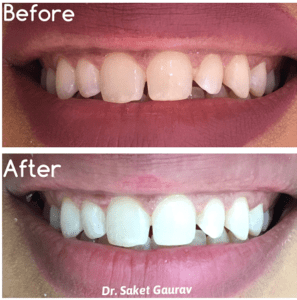
• They show before-and-after previews
• They use high-quality materials
• They offer transparent pricing
• They provide flexible payment stages

This makes the process simpler for patients and helps them understand exactly what they are paying for.

Smile Designing: What Influences the Cost?

The cost varies because every smile has different needs. Here are the biggest factors that affect smile designing costs in India.

1. The Dental Concerns You Want to Address

Minor stains require simple whitening.
Chipped teeth may require bonding.
Crooked teeth may need aligners.
Missing teeth may need implants.

Each issue requires different effort, materials, and time. That’s why someone who needs only whitening will pay far less than someone needing aligners, veneers, and implants.

2. The Number of Teeth Being Worked On

Most smile designs focus on the upper 6–10 teeth the ones visible when a person smiles. If lower teeth also need work, the cost increases.

A quote from one clinic may include 8 veneers, while another may include only 4 veneers, so comparing prices only makes sense when the number of teeth is clearly mentioned.

3. The Type of Smile Designing Procedures Included

Common procedures include:

• Teeth whitening
• Composite bonding
• Porcelain veneers
• Zirconia crowns
• Dental implants
• Clear aligners
• Gum reshaping

A basic smile design uses simple treatments, while advanced cases require a combination of multiple procedures. That is why smile designing costs in India vary widely.

4. Material Choices

Materials affect durability and appearance.

• Porcelain veneers look more natural than composite
• Zirconia crowns last longer than ceramic
• Premium aligners cost more than basic options

Clinics like Dr. Saket’s Dental Makeover show material samples so patients can choose based on look, strength, and budget.

5. Technology Used

Digital scanners, smile design software, and high-resolution cameras help dentists plan more precisely. Advanced technology reduces errors and speeds up treatment, but also adds value to the final cost.

A clinic using modern tools may charge slightly more, but the results are usually more predictable.

6. Timeline and Number of Visits Required

Some smile designs are completed in one week.
Some need months because alignment or gum reshaping is required.

More visits mean more planning and more chair time, which naturally affects cost.

7. Pre-Treatment Requirements

Before designing a smile, dentists sometimes need to treat:

• Cavities
• Gum infections
• Root canal problems
• Tooth extractions

These treatments are not part of the cosmetic cost but are essential for long-lasting results. After smile designing, patients may also need night guards or follow-ups.

How the Smile Designing Process Happens at Dr. Saket’s Dental Makeover

1. Consultation & Discussion

The dentist checks teeth, gums, jaw alignment, and smile flow. Photos and X-rays are taken to understand the full picture.

2. Digital Smile Preview

A digital mock-up is shown so the patient can visualise the final result.

3. Treatment Plan

A detailed plan is shared, mentioning procedures, the number of teeth, materials used, and cost options.

4. Procedure Execution

Treatments are done in phases depending on complexity: veneers, aligners, crowns, whitening, etc.

5. Final Smile Reveal

The new smile is checked, adjusted, and finalised for comfort and appearance.

6. Follow-Ups

Regular visits ensure the smile stays healthy and long-lasting.

Practical Tips to Maintain Your New Smile

• Keep regular dental checkups
• Use a night guard if recommended
• Avoid nail biting and chewing ice
• Follow proper brushing and flossing habits
• Avoid smoking and excessive tea/coffee

Proper care protects your investment and keeps your smile bright for years.

FAQs About Smile Designing Costs in India

1. What is the average cost of smile designing in India?

There is no fixed amount because costs depend on the number of teeth, type of procedures, materials and dentist’s expertise; simple cases may start from a few thousand rupees, while advanced full‑mouth makeovers can go much higher.

2. Why are prices different at every clinic?

Each clinic uses different materials, labs, technology and time, and dentists have different levels of experience, so a “best dentist near me” may charge more but offer better quality and longer‑lasting results.

3. How can someone know the exact price for their case?

The only reliable way is to visit a clinic like Dr. Saket’s Dental Makeover for a detailed check‑up and personalised treatment plan; online quotes without examination are only rough estimates.

4. Is smile designing permanent?

High‑quality crowns, veneers and implants can last many years with proper care, but they still need regular check‑ups, cleaning and sometimes replacement after long use, just like any other dental work.

5. Does health insurance cover smile designing?

Most insurance policies in India do not cover purely cosmetic procedures; they may cover medically necessary parts like extractions or root canals, so patients should confirm details with their insurer and the dental clinic in Indirapuram before starting.
Are you using the right Toothpaste?

Dr.Saket Gaurav
B.D.S.(India), PGD.Ortho, PGDAD(Cosmetic)
International Dental Practitioner
DENTAL MAKEOVER, Delhi NCR

We are lucky that in today’s world due to advancement in science, research and technology we get the best. We get options to choose best product according to our needs. When it comes to treatment again we get options most of the times. Today we are going to discuss about toothpastes, something very common and used every day by most of us. The number of toothpaste options is available on the market these days, its huge and it can be confusing making a decision about the best one to buy. There are toothpastes that strengthen gums, whiten teeth, control tartar and contain fluoride etc. Which one is best for you and which one should you purchase? This discussion about the various toothpastes on the market should help you choose the right one for you.

Anti Plaque toothpaste: These toothpastes control plaque accumulation on teeth, which reduces the toxic effects of the bacterial toxin on the tooth surrounding tissues, thereby reduces the chances of getting gum disease. Plaque if not cleaned properly hardens into tartar over time. Tartar/Plaque control toothpastes contain ingredients such as pyrophosphates and zinc citrate as well as an antibiotic and antifungal agent called triclosan, which helps to kill bacteria

Fluoridated toothpaste: Fluoride is the most important ingredient to look for when selecting toothpaste. It is a natural mineral that has contributed to a rapid decrease in tooth decay. Fluoride reduces the decay of tooth enamel by the formation of fluorapatite and its incorporation into the dental enamel. The fluoride ions reduce the rate of tooth enamel demineralization and increase the rate of remineralization of teeth at the early stages of cavities. There are many developed countries where the public water supply contains right amount of fluorides in it. When buying water for drinking we should always select the one which contains fluoride in it. Using a toothpaste containing fluoride will help you maintain healthy teeth.

Desensitizing toothpastes: For sensitive teeth, to either hot or cold food items. It helps in reducing the sensitivity on regular use. These toothpastes contain potassium nitrate, strontium chloride, sodium fluoride and other contents which help to block the nerve pathway, hence reducing the sensitivity. But make sure you visit your dentist if the sensitivity worsens.

Whitening toothpaste: There are a number of whitening toothpastes now on the market for people who are concerned about improving the whiteness of their teeth. Whitening toothpaste contains abrasive particles and chemicals that act to polish teeth and help remove stains. This is one of the reasons that it shouldn’t be use over used. If you are concern about whitening your teeth visit your dentist and get the best and safe advices for teeth whitening.

Natural toothpaste: For those who are uncomfortable with brushing with chemicals, natural toothpastes are an option. These toothpastes are made from herbal extracts and other natural ingredients, such as essential aloe-vera, oil of ginger, seaweed extract etc. The health claims of these toothpaste have not been clinically proven. Thus, it is important to check if these toothpastes contain fluoride, a proven active ingredient for the prevention of tooth decay already discussed above. Some people allergic to regular toothpaste may use natural toothpastes id recommended by dentist.

Kids’ toothpaste: Kids toothpastes are available in various stores according to the age groups. It’s a good idea to use it as recommended by the makers. It comes in different age groups according to the need of fluoride in particular age group. The fluoride content in toothpaste for younger kids will be less as compared to teenagers and adults.

Smokers Toothpaste: People who smoke often suffer stained teeth because of tar deposits. Some smokers toothpastes use stronger abrasives to remove these stains. Vigorous brushing with more abrasive pastes may damage the enamel over time. So instead of using hard bristled toothbrush and brushing hard visit your dentist for opinion and try to cut down smoking.

Fluoride is the most important ingredient to look for in toothpaste. Always avoid using whitening toothpaste if you have sensitive teeth. Make sure that the toothpaste you are buying is approved by some dental association. The toothpaste should not contain natural sweetening agent, it should contain artificial sweetening agents like sorbitol etc. Consult your dentist for their recommendations for any specific dental concerns you have.

TEETH WHITENING

Dr.Saket Gaurav
B.D.S.(India), PGD.Ortho, PGDAD(Cosmetic)
International Dental Practitioner
DENTAL MAKEOVER, Delhi NCR.

Your smile creates an immediate, subconscious, visual impact on people you meet. A brighter smile gives the impression of youth, vitality, radiant health, happiness, and warmth. A bright smile is perceived as a healthy smile. Tooth whitening is an increasingly popular cosmetic dentistry procedure that can make a massive difference on the appearance of your smile.

Causes of Tooth Discoloration
As we get older, our teeth naturally darken and discolor due to factors such as diet, age, lifestyle-smoking habits, drugs (like tetracycline), grinding (due to stress), trauma and even genetics. Tooth whitening can make your teeth look younger, cleaner and healthier.

Types of Tooth Stains
Extrinsic stains are those that appear on the surface of the teeth as a result of exposure to dark-colored beverages, foods and tobacco, and routine wear and tear. Superficial extrinsic stains are minor and can be removed by prophylactic dental cleaning and whitening.
Intrinsic stains are those that form on the interior of teeth. Intrinsic stains result from trauma, aging, exposure to minerals (like tetracycline) during tooth formation and/or excessive ingestion of fluoride. There are alternative cosmetic solutions to treat intrinsic staining, such as dental veneers and crowns.

Types of Teeth Whitening
There are various ways to whiten your teeth, but the two most common are office whitening and the home whitening systems-
Office Teeth Whitening
Professional tooth whitening in a dental office is the preferred whitening method because it is more effective. Even though stronger agents are applied, the rest of the mouth, including the gums, is protected from these materials. The best whitening systems feature a buffer in the gel that protects the tooth enamel from damage, are extremely effective, and can transform teeth color in a single visit. Your teeth can literally brighten up to 5 shades in about an hour.
Tooth whitening can last for 6 months or more, depending on how well you take care of your teeth.
Home Teeth Whitening Systems
They can either be used as a primary whitening option or as secondary option after office whitening to maintain the whitening result for longer time. Dentist’s supervision is must before you start using Home tooth whitening methods. They include whitening strips, paint-on tooth gel, mouth trays with gel. These are typically safe products.

Teeth Whitening Risks
Teeth whitening treatments are considered to be safe when procedures are followed as directed. However, there are certain risks associated with bleaching that you should be aware of:
Sensitivity: Bleaching can cause a temporary increase in sensitivity to temperature, pressure and touch.
Whitening sensitivity lasts no longer than a day or two, but in some cases may persist up to a month. It is recommended to use desensitizing toothpaste for few days after a whitening session.
Gum irritation: You might experience some degree of gum irritation resulting from the bleach concentration or from contact with the whitening trays. Such irritation typically lasts up to 1-2 days.

Maintaining Your Teeth Whitening Results
To extend the longevity of newly whitened teeth, it is recommended

  • To use home whitening  once to twice a month
  • Avoiding dark-colored foods and beverages for at least a week after whitening.
  • Whenever possible, sipping dark-colored beverages with a straw.
  • Practicing excellent oral hygiene – brushing and flossing after meals and at bedtime.


Which is the better toothbrush: Electric or manual?

Dr.Saket Gaurav
B.D.S.(India), PGD.Ortho, PGDAD(Cosmetic)
International Dental Practitioner
DENTAL MAKEOVER, Delhi NCR.

From the time we’re young, we’re taught that using a toothbrush regularly is one of the best ways to keep our teeth and gums healthy. But which toothbrush is best?

The earliest toothbrushes were actually small twigs people rubbed against their teeth to get rid of food bits and other pieces of debris. Over hundreds of years it evolved, beginning to feature bristles made from boar’s hair. In the late 1930s, when toothbrushes with nylon bristles were first invented, consumers choosing a toothbrush didn’t have many options. Now, the story’s completely different. Most stores that sell oral hygiene products now have an extensive collection of different types of toothbrushes on their shelves, including manual (disposable) and powered (electric) varieties.

Let’s take a look at the Pros and Cons of the two and find out.

Manual Toothbrush
Pros

  • Thoroughly clean teeth with proper brushing technique. Brushing only takes 2 minutes and you can most definitely keep your teeth at a grade A+ level with a manual toothbrush.
  • Multiple toothbrush styles, bristles, heads and colors to choose from. You have the ability to choose soft bristles if you have sensitive gums, and a smaller head if you have a smaller mouth. Some brands even make special prints on toothbrushes for children. Nevertheless, you’ll never be short of options with manual toothbrushes.
  • Easy to travel with. All you need is a toothbrush case and you’re all set to go for your trip. No need to worry about batteries or charging outlets.
  • No batteries or charging.
  • Inexpensive and often free whenever you make a trip to your dentist. Keep in mind that you should ditch your toothbrush after about 3 months of use.

Cons

  • More work.
  • No timing. Manual toothbrushes require you to guess how long your brushing session will last (unless you set a two-minute timer).

Electric Toothbrush
Pros

  • Easy to use. With a powered toothbrush, all you need to do is place the toothbrush at a 45° angle and let the toothbrush do all the work.
  • Less work for better results. Studies have shown that electric toothbrushes do a better job of cleaning your mouth and removing plaque and debris.
  • More fun to use for children. Children like to take the easy way out on chores. If a child never brushes their teeth because they don’t want to, try having them use an electric toothbrush. It’s less work, it tickles their teeth, and the timer will let them know they’re all done! It’s a lot easier (and more fun).
  • Built in timer. Electric toothbrushes use a built in timer that stops the toothbrush once two minutes are up; no more guessing!

Cons

  • Charging. You’ll either have to charge your toothbrush or replace its batteries.
  • Cost. Electric toothbrushes cost significantly more than a manual toothbrush. There are several types of powered toothbrushes but be prepared to pay more than you usually do.
  • Not as easy to travel with. Traveling with an electric toothbrush can be a hassle. They are bulky and bringing a charger along doesn’t help with room constraints.
  • Easy to break. Dropping your toothbrush can be fatal. You have to be more careful whenever using an electric toothbrush.

One last thing to point out: there have been a few studies that prove electric toothbrushes remove statistically significant more plaque compared to manual toothbrushes and are better at fighting gum disease. Despite the studies, your oral health will remain healthy (despite which type of toothbrush you use) as long as you consistently take care of your teeth. If you are on the fence of buying a powered toothbrush, talk to your dentists the next time you go for a checkup.

SMILE IS INFECTIOUS

Dr.Saket Gaurav
B.D.S.(India), PGD.Ortho, PGDAD(Cosmetic)
International Dental Practitioner
DENTAL MAKEOVER, Delhi NCR.

When you look at someone’s beautiful dazzling smile, it spreads like an infection and paints a ray of
sunshine all over your face. Smile is so universal that even a new born knows it by heart & when the
captivating smile is shared it melts the wall. But it is only possible when you have healthy and white
teeth.

COSMETIC DENTISTRY: A branch of dentistry dealing with the appearance of your teeth. It
handles the modification of your smile and anything having to do with how your teeth and gums look in
terms of the length, shape, color, alignment and proportion. But as a dentist for me it is obtaining the
most beautiful and long-lasting improvement in the appearance of someone’s smile with the minimal
amount of treatment. The primary aim of cosmetic dentistry is to improve the aesthetics of a person’s
teeth, gums or bite. There are a variety of cosmetic procedures available that are appealing to many
people. The most popular procedure is tooth whitening in which teeth are bleached to remove stains
and appear brighter. Other cosmetic dental procedures available to help you achieve your perfect smile
are:-

  • Dental implants provide custom, natural-looking replacements for missing teeth
  • Crowns /caps and dental bridges give you that whiter, brighter smile and later one also closes
    the missing space
  • Dental veneers hide many flaws
  • Tooth-colored restoration replace metal fillings for a natural appearance
  • Dental bonding uses a material that looks and feels like tooth enamel to repair damage and
    flaws
  • Inlays and onlays (or indirect fillings) remedy tooth decay or similar structural damage

A smile makeover typically involves one or more cosmetic dentistry procedures such as dental veneers,
dental implants, gingival sculpting and teeth whitening to give you the look you’ve always wanted
Full mouth reconstruction offers natural-looking and clinically sound treatments to correct functional
problems with your bite, muscles, teeth and bone structure.

First impression is the last impression and everyone is becoming more self conscious of their teeth when
they have chipped, discolored, deformed, crooked or missing teeth. They may feel the need to cover
their mouth every time they laugh and tend not to smile with their teeth in photos. Apart from affecting
a person's self confidence, it can also affect a person's oral health particularly if chipped or missing teeth
are left untreated. Good thing is that most of these issues can be resolved and treated or at least
worked out to get better than what it was before. Also, as a dentist, I believe there are always one or
more treatment options available for any dental issues at an affordable cost.

Depending on the complexity and severity of the problem, referral to dental specialists may be
necessary. Ask your dentist or oral health professional for further details. Always remember to get
dental health check up and oral prophylaxis (scaling) of your teeth every six months to keep your teeth
and oral health in good shape and also to check the condition of the treatment already taken.